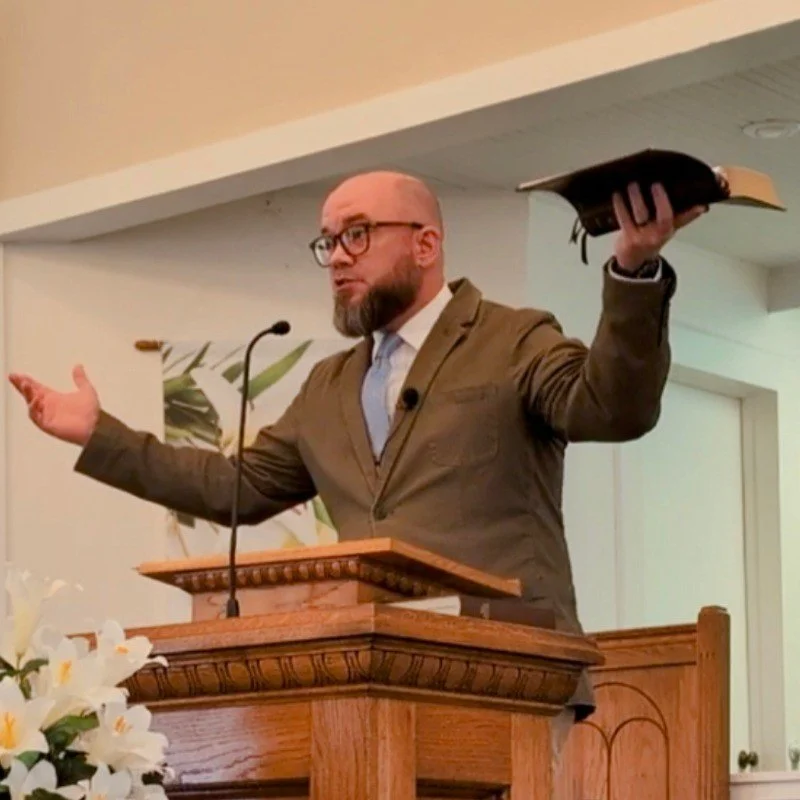
Why Morality Begins with the Creator, Not the Creature
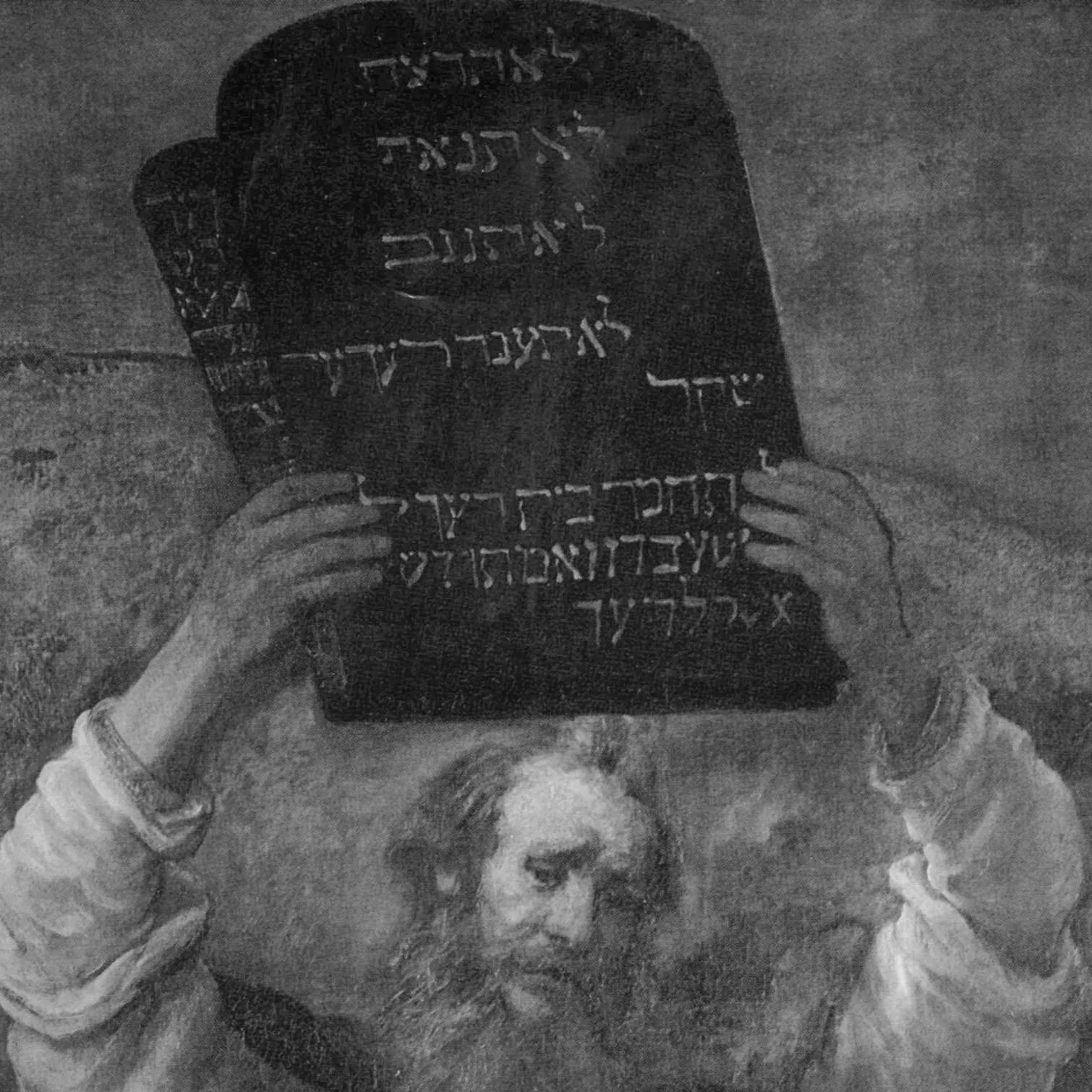
Rembrandt, Moses with the Ten Commandments
Note: This blog post has been adapted from a seminary term paper and has been carefully revised and shortened for the purpose of edification in a blog format. If you have questions or would like to continue the conversation, please feel free to contact us.
In a world saturated with moral opinions, humanity continues to wrestle with an ancient question: What makes something right or wrong? Philosophers, religions, and cultures have offered countless answers—but they all share a fatal flaw. They begin with the creature rather than the Creator.
According to the Christian worldview, ethical confusion arises from a failure to maintain the distinction between creator and creation. God alone is self-existent, independent, and the ultimate standard of goodness. Man, as God’s image-bearer, is dependent and derivative. God alone possesses absolute lordship and sovereignty over all things—and therefore His will alone defines righteousness. When the creature attempts to define morality apart from God’s revelation, ethics loses both its authority and coherence.
Morality Requires a Designer
Consider a simple analogy: an iPhone only functions properly when used according to the design and purpose established by its creator, Apple. Ignore that design, and dysfunction is inevitable. In the same way, humanity cannot flourish morally or spiritually while ignoring the moral design of its Creator. Every ethical system built apart from God is like rewriting an operating system without understanding its architecture—it may appear innovative, but it ultimately ends in chaos.
As John Frame rightly states, “Ethics is theology, viewed as a means of determining what we ought to do.” Christian ethics begins not with autonomous human reason, but with divine revelation. Moral truth flows from the character of the triune God as revealed in Scripture. Remove God from ethics, and morality collapses into subjectivism.
The Nature of Christian Ethics
Biblical ethics is not merely a list of rules or social conventions. It is the application of theology to life. God’s moral law reveals His holy character and defines how His image-bearers are to reflect Him in every sphere of existence. Scripture reminds us, “The fear of the LORD is the beginning of wisdom” (Prov. 9:10).
Frame explains that God’s Lordship includes three inseparable attributes:
Control – God sovereignly governs all things. (Dan. 4:35; Ps. 115:3; Prov. 16:9)
Authority – God has the divine right to define good and evil. (Isa. 33:22; Deut. 6:1–2; Jas. 4:12)
Presence – God is covenantally near His people in grace and mercy. (Lev. 26:12; Matt. 28:20; Heb. 13:5)
Scripture consistently presents ethics as a response to God’s Lordship—His sovereign control, righteous authority, and gracious covenant presence among His people. This tri-fold Lordship forms the backbone of Christian ethics. God’s commands are not arbitrary; they reveal the moral structure of His creation. Obedience, therefore, is not mere rule-keeping—it is covenant faithfulness. To live ethically is to live worshipfully.
Ethics as a Revelation of God’s Holiness
God calls His people to holiness because He Himself is holy: “You shall be holy, for I the LORD your God am holy” (Lev. 19:2). Louis Berkhof explains that God’s holiness is both transcendent—set apart from all creation—and communicable, meaning His people are called to reflect it through union with Christ and the power of the Holy Spirit.
God has not left humanity without instruction. His moral law is written on the heart, revealed in Scripture, and perfectly embodied in Jesus Christ, “the Holy and Righteous One” (Acts 3:14). From the Law and the Prophets to the Gospels and Epistles, God has graciously revealed the ethical standard by which we are to live.
The Purpose of Ethics
For believers, ethics is not about earning salvation. Justification is secured by grace alone through faith alone in Christ alone. But sin still disrupts fellowship with God. Scripture consistently teaches that unconfessed sin hinders communion with Him (Ps. 66:18; Isa. 59:2; Eph. 4:30).
Ethical living, then, is about restored fellowship and faithful obedience. As James Montgomery Boice observed, sanctification involves being “renewed in knowledge in the image of [our] Creator” (Col. 3:10). The ultimate goal of ethics is communion with God—loving Him and loving our neighbors according to His Word.
Law, Gospel, and the Power to Obey
God’s Law reveals sin and drives us to Christ, but it cannot justify or save. As Frame notes, the Law is a gracious gift, yet powerless apart from grace. Jesus Himself said, “If you love Me, keep My commandments” (John 14:15). Obedience flows from redemption, not the other way around.
The Gospel provides what the Law demands but cannot supply—a righteous substitute, a transformed heart, and the indwelling Spirit. As the Heidelberg Catechism beautifully states, “we do good works out of gratitude, for God’s glory, for assurance of faith, and for the witness of the Gospel.”
The Futility of Non-Christian Ethics
Scripture is clear: “The natural man does not receive the things of the Spirit of God” (1 Cor. 2:14). Apart from regeneration, the human mind becomes autonomous—acting as its own final authority. Greg Bahnsen rightly observed that unbelief makes man “a law unto himself,” which inevitably leads to moral incoherence.
Non-Christian ethical systems borrow Christian moral categories—justice, dignity, love—while rejecting the worldview that gives those concepts meaning. As a result, society demands justice while denying righteousness, seeks freedom without restraint, and affirms human worth without an objective basis for it.
Modern social justice movements illustrate this confusion. As Thaddeus Williams notes, “true justice begins with worship of the true God.” Remove justice from its theological foundation, and it becomes captive to politics, power, and cultural sentiment.
Law Without Gospel—and Gospel Without Law
Other worldviews fail in different ways. Judaism and Islam affirm divine law but offer no sufficient atonement. Eastern religions deny moral guilt altogether. Secularism empties morality of transcendence and reduces ethics to preference or consensus. Each system ultimately fails because it cannot deal with sin or provide the righteousness God requires.
Living Ethically Before the Creator
True ethics begins with this confession: God is Lord. Moral truth flows from His nature, is revealed in His Word, and is fulfilled in the Gospel of Jesus Christ. Every moral question is ultimately a theological question.
Christian ethics is not abstract theory—it is a life of worship lived coram Deo, before the face of God. As believers, we are called to think God’s thoughts after Him, walk in obedience by the Spirit, and demonstrate to a confused world that true morality is found only in the God who made us, speaks to us, and saves us through His Son.
In the end, Christian ethics is simply this: living all of life under the Lordship of Christ, for the glory of God alone.
References:
Bahnsen, Greg L. Always Ready: Directions for Defending the Faith, Edited by Robert R. Booth. Nacogdoches, TX: Covenant Media Press, 2018.
Berkhof, Louis. Systematic Theology. Grand Rapids, MI: WM.B. Eerdmans Publishing Co., 1977.
Boice, James Montgomery. An Expositional Commentary: Genesis. vol. 1, Creation and Fall. Grand Rapids, MI: Baker Books, 2006.
Frame, John M. The Doctrine of the Christian Life. Phillipsburg, NJ: P&R Publishing, 2008.
Williams, Thaddeus. Confronting Injustice Without Compromising Truth: 12 Questions Christians Should Ask About Social Justice. Grand Rapids, MI: Zondervan Academic, 2020.